
Federico Chiesa Sent Home: Italy’s Shocking Squad Decision Sparks Outrage
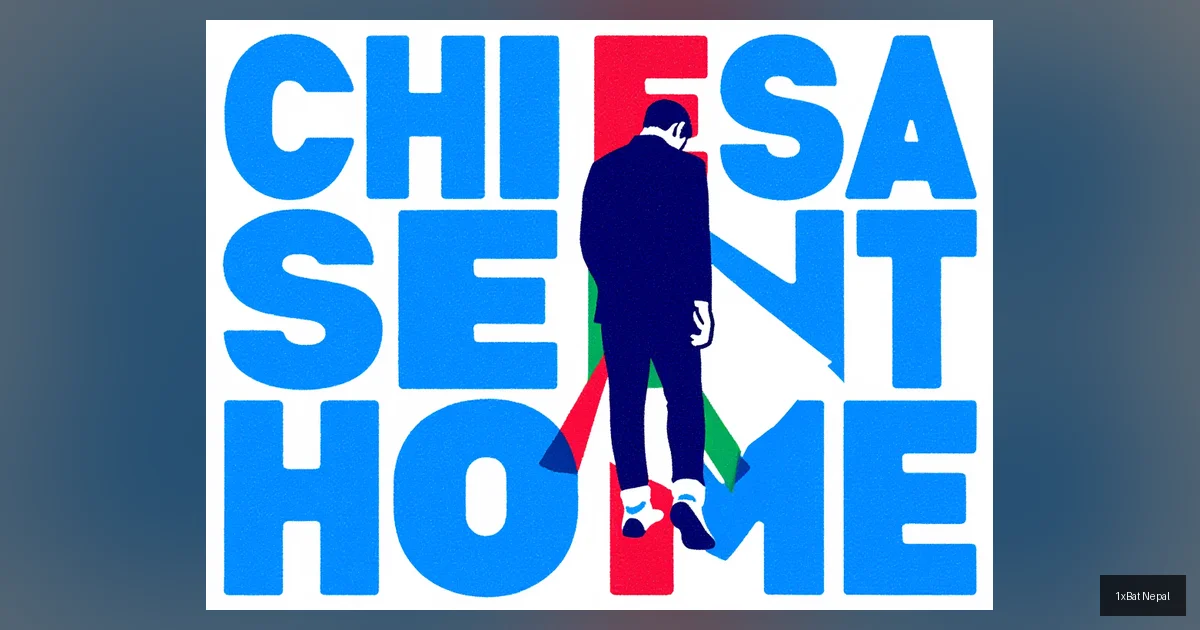
The bombshell dropped like a thunderclap across Italian football: Federico Chiesa, the electric Juventus winger and talisman of the Azzurri’s Euro 2020 triumph, has been sent home from the national team camp. In a move that has sent shockwaves through the sport, Italy’s head coach has made the brutal decision to exclude one of his most potent attacking weapons ahead of crucial Euro 2024 qualifiers, opting instead for a radical focus on squad harmony and mental resilience over pure tactical preparation.
- Key Decision: Federico Chiesa excluded from Italy squad
- Context: Euro 2024 qualifying preparation
- Venue Shift: Training moved from Milan’s San Siro to Bergamo
- Coaching Approach: Team unity dinners replace tactical sessions
The Radical Reset: Dinners Over Drills
In what represents a fundamental philosophical shift in international football management, Italy’s coaching staff has completely abandoned traditional training camp structures. Instead of whiteboards, markers, and tactical drills, they’ve been sharing dinners with players across Europe—a deliberate move to foster camaraderie during a period without formal training camps. “There was no white board or markers. We didn’t go to talk about football or tactics. We were there to create team unity,” the coach emphasized in his revealing explanation of the unconventional approach.
This radical methodology speaks to a deeper crisis within Italian football. After failing to qualify for the 2022 World Cup—a national humiliation that still reverberates—the Azzurri are undergoing what can only be described as psychological reconstruction. The decision to send Chiesa home, while shocking on the surface, appears to be part of this broader reset. It’s not merely about form or fitness; it’s about building a squad capable of handling the immense pressure that comes with wearing the blue shirt.
Escaping the San Siro Pressure Cooker
Another seismic change in Italy’s preparation has been the relocation from the iconic but unforgiving San Siro in Milan to the more supportive atmosphere of Bergamo. “At the first errant pass you start hearing the whistles,” the coach explained about the toxic environment at Milan’s legendary stadium. “Whereas when we played in Bergamo we got cheered at halftime when it was 0-0.”
This venue switch represents more than just geographical convenience—it’s a psychological masterstroke. Bergamo, a city that suffered tremendously during the COVID-19 pandemic, has shown remarkable resilience that the national team hopes to emulate. The contrast couldn’t be starker: where Milan’s San Siro represents the weight of history and expectation, Bergamo offers something more precious in this moment—unconditional support during the rebuilding phase.
Key Player Stats: Italy’s Attacking Conundrum
| Player | Position | International Caps | International Goals | Euro 2024 Qualifying Appearances |
|---|---|---|---|---|
| Federico Chiesa | Forward | 42 | 7 | 3 |
| Giacomo Raspadori | Forward | 21 | 6 | 5 |
| Nicolò Zaniolo | Midfielder | 17 | 2 | 4 |
| Ciro Immobile | Forward | 55 | 15 | 6 |
The statistics reveal the magnitude of the Chiesa decision. With 42 caps and 7 international goals—including crucial contributions during Italy’s Euro 2020 triumph—Chiesa represents proven quality at the highest level. His exclusion creates a significant void in Italy’s attacking options, particularly given his ability to change games with individual brilliance. The table above shows how Italy’s forward line now leans more heavily on players like Giacomo Raspadori and the experienced Ciro Immobile, while younger talents like Nicolò Zaniolo must step up in Chiesa’s absence.
The Psychology of Adversity
Central to this entire approach is a renewed focus on mental fortitude. “I really worked a lot over these months at dealing with adversity,” the coach revealed. “One event shouldn’t change the dynamics of a match. It depends on how you react and deal with it.” This philosophy explains the Chiesa decision in stark terms: if a player—no matter how talented—doesn’t fit the collective psychological profile the coaching staff is building, they become expendable.
This represents a dramatic departure from traditional Italian football thinking, where individual talent has often been prioritized over collective harmony. The coach’s reference to other sports is particularly telling: “When I see us winning in other sports it gets me motivated. It makes me feel pride.” There’s a clear desire to build a team that embodies the resilience and unity seen in Italy’s successful Olympic athletes rather than the fractured squads of recent football memory.
What’s Next: Euro 2024 Qualification Pathway
Italy finds itself at a critical juncture in Euro 2024 qualifying. After the World Cup qualification disaster, failure to reach the European Championship in Germany would represent an unthinkable second consecutive major tournament absence. “Right now our history tells us that we’re struggling,” the coach acknowledged with refreshing honesty. “But we’ve got a big chance here to reach our goal.”
The upcoming qualifiers will test this new approach to its limits. Without Chiesa’s game-changing ability, other attackers must elevate their performances. The team unity built through those European dinners will face immediate examination under competitive pressure. And the Bergamo experiment—moving away from the San Siro’s intensity—will either be validated as genius or criticized as avoidance of necessary pressure.
Looking beyond the immediate qualifiers, this represents a fundamental philosophical shift for Italian football. The Italy national team has traditionally been built around star individuals—from Paolo Rossi to Roberto Baggio to Francesco Totti. Now, for perhaps the first time in modern history, the collective is being prioritized above all else, even when that means excluding a player of Chiesa’s caliber.
Frequently Asked Questions
Why was Federico Chiesa sent home from the Italy national team?
Federico Chiesa was excluded from the Italy squad as part of a radical new approach focusing on team unity and psychological resilience over individual talent. The coaching staff has implemented unconventional methods including team dinners instead of tactical sessions and has prioritized players who fit a specific collective mentality ahead of Euro 2024 qualifying.
What are Italy’s chances of qualifying for Euro 2024 without Chiesa?
Italy’s qualification chances remain strong despite Chiesa’s absence, though they face increased pressure on other attacking players to deliver. The team currently sits in a competitive qualifying group where every point matters. The new unity-focused approach could either galvanize the squad or expose a lack of individual match-winners in crucial moments.
How has Italy’s preparation changed under the current coaching staff?
Italy’s preparation has undergone a complete transformation: traditional tactical sessions have been replaced by team-building dinners across Europe, training has moved from Milan’s San Siro to Bergamo to escape negative atmospheres, and player selection now prioritizes psychological profile and team harmony over pure footballing ability.
What impact will playing in Bergamo instead of San Siro have on Italy?
The move to Bergamo represents a psychological shift from the pressure-cooker environment of San Siro, where players face immediate criticism for mistakes, to a more supportive atmosphere that the coaching staff believes will foster resilience and unity during Italy’s rebuilding phase after failing to qualify for the 2022 World Cup.
Who will replace Federico Chiesa in Italy’s starting lineup?
With Chiesa excluded, Italy will likely turn to a combination of Giacomo Raspadori, Nicolò Zaniolo, and experienced striker Ciro Immobile to provide attacking threat. The specific formation and starting combination will depend on the opponent and whether the coaching staff opts for the unity-focused players who have participated in the team-building dinners across Europe.