
Bartomeu Reveals Truth: Messi Never Controlled Barcelona Transfers
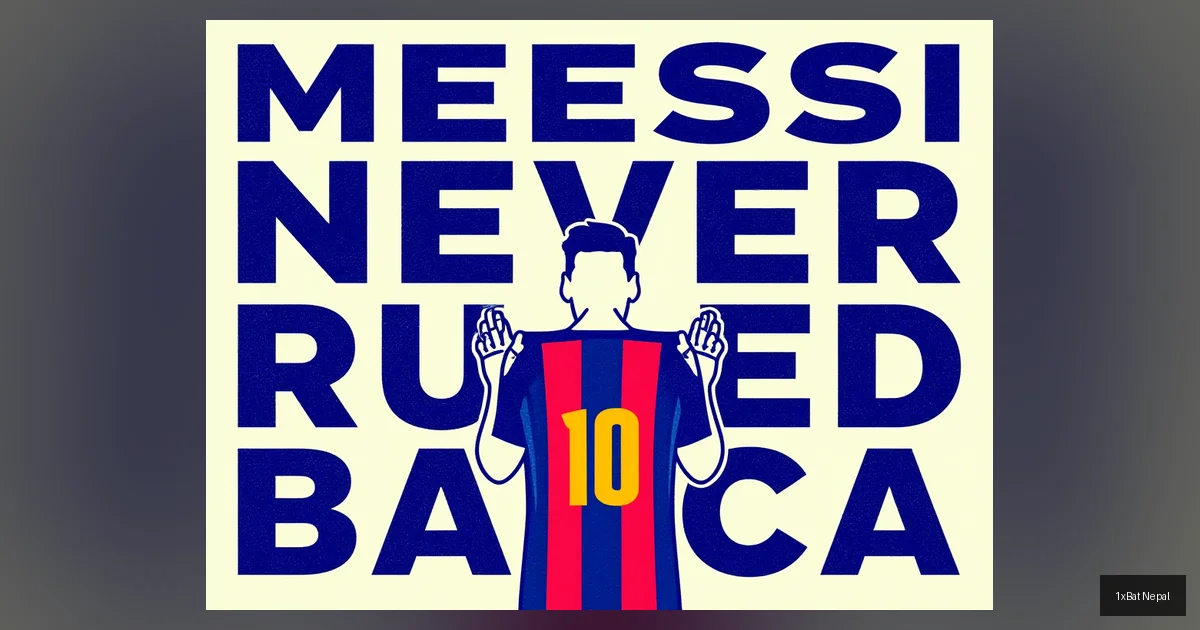
The narrative has been repeated so often it’s become accepted truth: Lionel Messi didn’t just play for Barcelona, he ruled it. For years, whispers suggested the Argentine superstar held veto power over transfers, influenced coaching appointments, and operated with privileges no other player enjoyed. But now, in a revealing interview that cuts through the speculation, former Barcelona president Josep Maria Bartomeu has systematically dismantled this enduring myth, painting a picture of a purely professional relationship where the world’s greatest footballer focused solely on what happened between the white lines.
- Key Revelation: Bartomeu denies Messi had decision-making power on signings or coaches.
- Critical Moment: The August 2020 contract standoff that nearly saw Messi leave.
- Source: Interview with Catalunya Radio.
- Context: Ongoing debate about player power at elite football clubs.
The Myth of Messi’s Barcelona Kingdom
In the world of modern football, where superstar influence often extends beyond the pitch, Lionel Messi’s tenure at Barcelona has been subject to intense scrutiny. Stories circulated about his supposed involvement in the club’s transfer market activities, with some suggesting he could block or demand specific signings. Others claimed he had a direct line to the boardroom, influencing everything from tactical approaches to commercial decisions. Bartomeu’s comments represent the most direct refutation of these claims from someone who sat at the very top of the club’s hierarchy during Messi’s peak years.
“Everyone talks about Leo’s power when he was at Barca, but Messi didn’t decide on signings or coaches; he had no privileges,” Bartomeu stated unequivocally. “Outside of the sporting side, he never made any decisions.” This clarification is significant because it comes from the president who oversaw Barcelona during both their greatest triumphs and most turbulent periods, including the controversial departure of manager Ernesto Valverde and the ill-fated signing of Philippe Coutinho.
Key Player Stats: Messi’s Barcelona Legacy
| Statistic | Career Total | Per Season Average |
|---|---|---|
| Appearances | 778 | 43.2 |
| Goals | 672 | 37.3 |
| Assists | 303 | 16.8 |
| Trophies Won | 35 | 1.94 |
| Ballon d’Or Awards | 6 (while at Barça) | N/A |
These staggering numbers highlight why Messi was considered Barcelona’s “most important asset,” as Bartomeu described him. Yet despite this monumental contribution, the former president insists the relationship remained strictly professional. Messi’s influence was confined to his performances on the pitch, where he served as the focal point of Pep Guardiola’s tiki-taka revolution and later Luis Enrique’s treble-winning side. The administrative burdens, recruitment challenges, and financial decisions that plagued Barcelona in recent years fell squarely on the board and sporting directors.
The 2020 Standoff: Why Messi Stayed at Barcelona
Perhaps the most revealing portion of Bartomeu’s interview concerns the dramatic summer of 2020, when Messi attempted to trigger a clause in his contract that would allow him to leave as a free agent. The football world held its breath as legal notices were exchanged and speculation mounted about a potential move to Manchester City or PSG. Bartomeu’s account provides crucial context about why that transfer never materialized.
“In August 2020, when Messi asked to leave, I told him no because he’s our most important asset and one of our main sources of income,” Bartomeu explained. “I couldn’t give him a free transfer, and besides, he had a contract. I think he understood, and that’s why he stayed.”
This frank admission reveals the cold business calculus behind one of football’s most emotional sagas. Barcelona, already facing financial difficulties that would later explode into full-blown crisis, simply couldn’t afford to lose their greatest commercial and sporting asset without compensation. The club’s precarious economic position meant that even a player of Messi’s stature couldn’t dictate terms when contractual obligations and financial realities collided.
Messi’s Expectations and the Surprise Departure
Bartomeu added another layer to the story, suggesting Messi remained at Camp Nou with specific expectations about the club’s future direction. “He thought there would be a new board in a few months that would renew his contract,” Bartomeu revealed. “His surprise came when the time came to renew and they fired him.”
This comment speaks volumes about the disconnect between player and club during Barcelona’s transitional period. Messi apparently believed that Bartomeu’s departure would usher in a new era where his future would be secured, only to discover that the financial realities facing his successor, Joan Laporta, made a renewal impossible. The eventual tearful departure in August 2021 marked the end of an era, but according to Bartomeu, it wasn’t the result of player power but rather its absence.
What’s Next for Barcelona’s Legacy and Messi’s Story
Bartomeu’s revelations arrive at a critical juncture for Barcelona as the club continues to navigate post-Messi reality. The financial constraints that prevented a free transfer in 2020 have only intensified, forcing the club to leverage future television rights and implement strict salary controls. Meanwhile, Messi has found success elsewhere, winning the World Cup with Argentina and continuing to perform at an elite level in MLS with Inter Miami.
The broader implications extend beyond Catalonia. In an era where players like Kylian Mbappé and Erling Haaland wield significant influence over their career trajectories, Bartomeu’s account serves as a reminder that even the greatest players operate within structural constraints. The narrative of Messi as Barcelona’s shadow director has been compelling, but the former president’s testimony suggests a more nuanced reality where sporting excellence and administrative authority remained separate domains.
As Barcelona rebuilds under Xavi Hernández and attempts to reclaim their place among Europe’s elite, understanding this history becomes crucial. The club’s future success may depend on learning from past relationships and creating structures where sporting talent can flourish without the burden of administrative responsibility—exactly the arrangement Bartomeu describes with Messi.
Frequently Asked Questions
Did Lionel Messi really have no say in Barcelona transfers during Bartomeu’s presidency?
According to Josep Maria Bartomeu’s recent interview, Messi had zero involvement in Barcelona’s transfer decisions or coaching appointments. The former president stated explicitly that Messi “didn’t decide on signings or coaches” and had “no privileges” outside his sporting contributions. This directly contradicts popular narratives that suggested Messi wielded veto power over incoming players.
Why did Messi stay at Barcelona in 2020 instead of forcing a transfer?
Bartomeu explains that he refused Messi’s request to leave as a free agent in August 2020 because the Argentine was Barcelona’s “most important asset and one of our main sources of income.” With the club already facing financial difficulties, they couldn’t afford to lose Messi without compensation. Additionally, Messi had a valid contract, and Bartomeu believes the player understood these business realities, which is why he ultimately stayed for one more season.
What did Bartomeu mean when he said Messi was “surprised” when Barcelona didn’t renew his contract?
Bartomeu suggests Messi remained at Barcelona in 2020-21 expecting that a new board would take over and renew his contract. When Joan Laporta’s administration did take charge but couldn’t offer a renewal due to La Liga’s financial fair play regulations, Messi was reportedly surprised by the outcome. This indicates a disconnect between the player’s expectations and the club’s worsening financial situation.
How does Bartomeu’s account change our understanding of player power at top football clubs?
Bartomeu’s revelations challenge the popular notion that superstar players like Messi control club decisions behind the scenes. His account suggests that even the most influential players operate within contractual and financial constraints. This has implications for how we view current player power dynamics at clubs like PSG (with Mbappé) and Manchester City, where the balance between player influence and club control remains constantly negotiated.
What were the key factors in Messi’s eventual Barcelona departure in 2021?
While Bartomeu’s interview focuses on the 2020 standoff, Messi’s actual departure in 2021 resulted from Barcelona’s catastrophic financial situation. The club had exceeded La Liga’s salary cap by approximately 40%, making it impossible to register Messi’s new contract even though both parties had agreed to terms. This was less about player power and more about structural financial collapse that even Barcelona’s greatest-ever player couldn’t overcome.