
Bartomeu Reveals Truth: Messi Never Controlled Barcelona Transfers
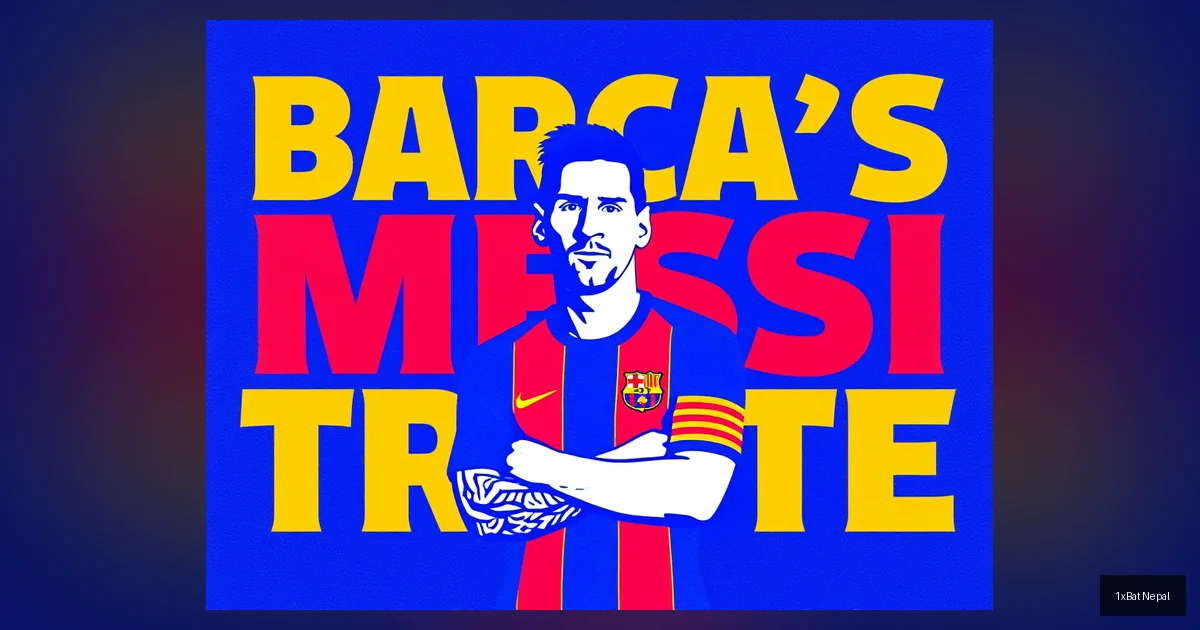
The narrative has been repeated so often it’s become football gospel: Lionel Messi didn’t just play for FC Barcelona, he ran the club. From dictating transfer targets to influencing managerial appointments, the Argentine’s legendary on-field dominance was supposedly matched by an equally powerful off-field shadow. But now, the man who sat in the president’s chair during Messi’s final, tumultuous years at Camp Nou is forcefully dismantling that myth, painting a picture of a strictly professional relationship where the world’s greatest footballer focused solely on what happened between the white lines.
- Key Figure: Former Barcelona President Josep Maria Bartomeu
- Subject: Lionel Messi’s influence at Barcelona
- Context: 2020-2021 contract standoff and departure
- Source: Interview with Catalunya Radio
The Myth of Messi’s Power: A President’s Rebuttal
In a revealing interview with Catalunya Radio, Josep Maria Bartomeu directly addressed the persistent rumors that Messi wielded undue influence over Barcelona’s sporting decisions. “Everyone talks about Leo’s power when he was at Barca,” Bartomeu stated, “but Messi didn’t decide on signings or coaches; he had no privileges. Outside of the sporting side, he never made any decisions.” This clarification strikes at the heart of a popular narrative that has followed Messi’s career, suggesting his unparalleled talent granted him a de facto veto power in the boardroom. Bartomeu’s account insists the division was clear: Messi was the focal point of the team’s on-field success, but his involvement stopped decisively at the touchline. The complex administrative, financial, and recruitment hurdles that defined Barcelona’s turbulent late-2010s era were the sole domain of the board and sporting directors.
The 2021 Standoff: Contract, Commerce, and a Surprise Exit
Bartomeu’s most candid revelations concern the explosive summer of 2020, which set the stage for Messi’s emotional departure a year later. The former president provided crucial context for the now-infamous Barcelona transfer saga, recalling the moment Messi attempted to force an exit via a legal notice (burofax). “In August 2020, when Messi asked to leave, I told him no because he’s our most important asset and one of our main sources of income,” Bartomeu explained. His stance was rooted in cold, hard business reality. Granting a free transfer to the club’s greatest-ever player and commercial engine was financially unthinkable. “I couldn’t give him a free transfer, and besides, he had a contract.”
According to Bartomeu, Messi ultimately understood this position, which led to his decision to stay for the 2020-21 season. However, a critical misunderstanding sowed the seeds for the eventual rupture. “He thought there would be a new board in a few months that would renew his contract,” Bartomeu revealed. This expectation was shattered when Joan Laporta’s newly elected board, facing the club’s dire financial reality, made the painful decision not to renew Messi’s contract in the summer of 2021. “His surprise came when the time came to renew and they fired him,” Bartomeu concluded, highlighting the brutal business calculus that overrode sentiment, leaving Messi to join Paris Saint-Germain in a move that stunned the football world.
Key Player Stats: The Messi Era at Barcelona
| Statistic | Figure | Context |
|---|---|---|
| First-Team Seasons | 17 (2004-2021) | Senior career at Barcelona |
| Total Appearances | 778 | All competitions |
| Total Goals | 672 | Club-record scorer |
| Major Trophies | 35 | Including 4 Champions Leagues, 10 La Liga titles |
| Ballon d’Or Wins (at Barca) | 6 | Awarded while at the club |
What’s Next: Barcelona’s Post-Messi Reconstruction
The fallout from Messi’s departure continues to define Barcelona’s present and future. The club’s current leadership, under President Joan Laporta, is navigating the immense challenge of rebuilding a sporting project and financial structure that was fundamentally built around one generational talent. The strategy has involved a painful austerity drive, the promotion of youth academy products, and strategic, often free, signings to remain competitive in La Liga and Europe. The La Liga title race remains a primary target, but the ultimate measure of success will be restoring Barcelona’s status as a perennial Champions League contender—a status intrinsically linked to the Messi era. The narrative of who holds power at the club has also shifted, with a renewed focus on coach Xavi Hernandez’s vision and the board’s financial acumen, further distancing the current era from the perceived shadows of the past.
Frequently Asked Questions
Did Lionel Messi really have the power to choose Barcelona’s managers?
According to former president Josep Maria Bartomeu, no. Bartomeu explicitly stated that Messi “didn’t decide on signings or coaches” and had “no privileges” in administrative matters. While Messi’s opinion as the team’s leader was undoubtedly valued, Bartomeu’s account insists the final decisions on managerial appointments rested solely with the club’s board and sporting directors.
Why did Barcelona let Messi leave on a free transfer in 2021?
Contrary to some reports, Messi did not leave on a free transfer. His contract expired in June 2021, and the new board, led by Joan Laporta, was unable to register a new contract for him due to La Liga’s strict financial fair play (salary cap) rules. The club’s dire financial situation, exacerbated by the pandemic and previous mismanagement, made it impossible to fit his salary within the league-imposed limit, leading to his departure as a free agent.
What was the “burofax” that Messi sent to Barcelona?
In August 2020, Messi’s legal team sent a burofax—a certified legal document—to Barcelona’s offices. This document formally communicated his desire to activate a clause in his contract that he believed allowed him to leave the club for free at the end of the season. The club contested the validity of the clause due to timing, leading to a tense standoff that was resolved when Messi agreed to stay for the 2020-21 season.
How has Barcelona performed financially since Messi’s departure?
Barcelona’s financial recovery has been slow and complex. While removing Messi’s massive salary from the books provided immediate relief, the club remains burdened by significant debt and a bloated wage bill from previous contracts. President Laporta has employed “financial levers,” such as selling future media rights and a portion of Barça Studios, to generate immediate liquidity and register new players, but the long-term sustainability of the model is a subject of ongoing debate among fans and analysts.