
Forest’s Transfer Dilemma: ‘Not Getting Rubbish Players’ But Still Failing
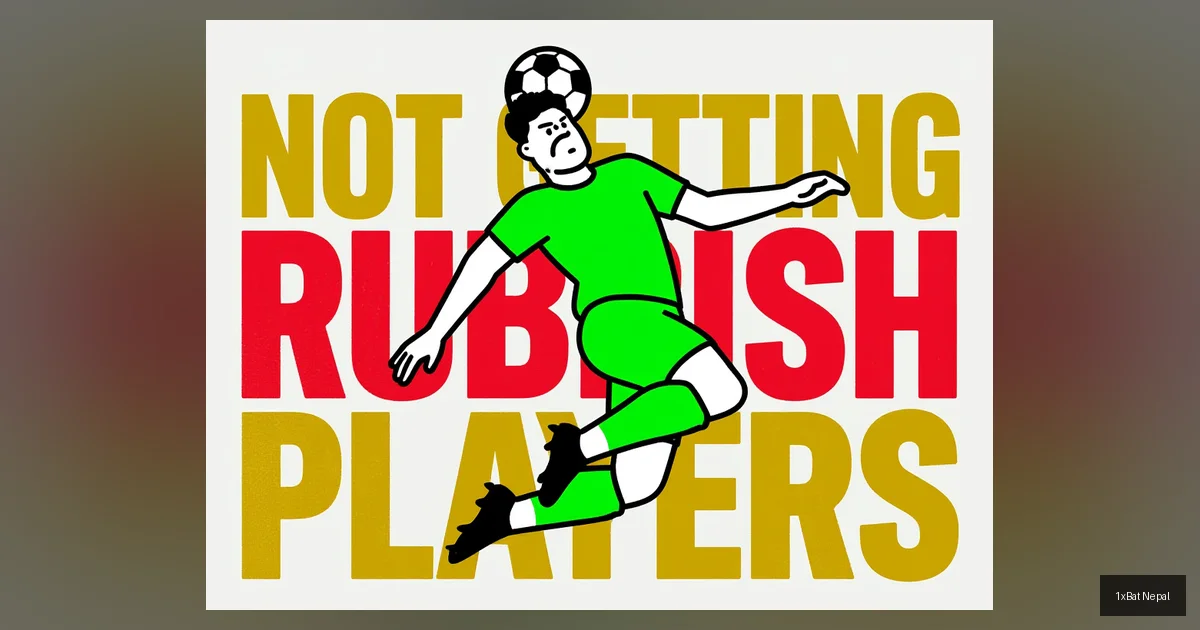
The air at the City Ground has grown thick with frustration, a palpable tension that hangs over every misplaced pass and every dropped point. Nottingham Forest, a club with a storied history and passionate fanbase, finds itself trapped in a cycle of promise and disappointment. The players are there—talented, capable, and hungry—yet something fundamental is missing. In an exclusive interview with GOAL, former Forest forward Marlon Harewood has pinpointed the core of this modern football conundrum: a transfer strategy that delivers quality but lacks cohesion, leaving managers to wrestle with a squad they didn’t shape.
- Key Insight: Harewood’s analysis of Forest’s transfer model
- Context: Nottingham Forest’s ongoing Premier League struggles
- Source: Exclusive interview via Casino Zonder Cruks
The Harewood Diagnosis: Quality Without Cohesion
Marlon Harewood, who made over 150 appearances for Forest between 2003 and 2007, speaks with the authority of someone who has lived the club’s culture. His words cut to the heart of Forest’s current predicament. “The players that he’s getting in are good players,” Harewood stated, referring to the club’s sporting director-led recruitment. “But it’s just not the players of a manager’s thought process, how he sees he wants to play.” This isn’t about talent deficiency; it’s about philosophical misalignment. Forest’s recruitment team has avoided what Harewood bluntly calls “rubbish players”—the squad is stocked with technically gifted individuals—but these acquisitions don’t necessarily fit the tactical blueprint of the manager in the dugout.
Every manager arrives with a distinct footballing identity, a vision for how their team should dominate possession, press opponents, or transition from defense to attack. This vision requires specific player profiles: a ball-playing center-back here, a creative midfielder there, a pacey winger with defensive discipline. When recruitment operates independently of this vision, even excellent players can become square pegs in round holes. Harewood emphasizes that this creates a fundamental disconnect: “Every manager’s got their own ways and how they see things. And they’ve got players that will fit their mould.” At Forest, the mould keeps changing while the pieces remain the same.
Key Player Stats: Forest’s Recent Signings
| Player | Position | 2023-24 Premier League Stats | Transfer Fee |
|---|---|---|---|
| Morgan Gibbs-White | Attacking Midfielder | 5 goals, 8 assists | £42.5m |
| Taiwo Awoniyi | Striker | 6 goals, 2 assists | £17.5m |
| Murillo | Center-Back | 1.5 tackles per game | £11m |
| Callum Hudson-Odoi | Winger | 3 goals, 1 assist | £3m |
These statistics reveal a squad with genuine Premier League quality. Gibbs-White has been creative, Awoniyi clinical when fit, Murillo solid defensively, and Hudson-Odoi a bargain. Yet, as Harewood notes, individual brilliance hasn’t translated into collective success. The issue isn’t the players’ ability but how they’re deployed within a coherent system. This table underscores Harewood’s point: Forest aren’t signing “rubbish players”—they’re investing in talent—but without a unified football philosophy, these assets remain underutilized.
The Manager’s Burden: Making It Work
Harewood doesn’t let managers off the hook entirely. He acknowledges the professional responsibility that comes with the job: “But that’s what he brought you in to do. So if you’re taking a manager’s job, beforehand you’re going in and having a meeting and you would be doing your due diligence and you’d be told what players you’ve got.” In modern football, due diligence is non-negotiable. A manager accepting the Forest role knows the squad composition, the strengths and weaknesses of each player, and the broader club structure. There’s no excuse for being blindsided.
Yet, this creates a paradoxical expectation. Managers are hired to implement their vision but must work with players chosen by others. Harewood describes this as “another spanner in the works.” The manager’s task becomes one of adaptation rather than creation. They must find ways to “get the best out of them,” squeezing maximum performance from a group that may not naturally fit their preferred style. This often leads to compromised tactics, players played out of position, and inconsistent results. For fans watching Forest’s highlights, it manifests as moments of individual brilliance overshadowed by tactical confusion.
What’s Next: Forest’s Survival Battle
As the Premier League season enters its decisive phase, Nottingham Forest faces a brutal survival battle. The club sits precariously above the relegation zone, with every point precious. Harewood’s analysis suggests that immediate improvement hinges on resolving this philosophical disconnect. Will the club’s hierarchy grant the manager greater influence over January signings? Or will they continue with the sporting director model, trusting that the right coach can unlock the existing talent?
The upcoming fixtures against fellow strugglers will test this squad’s mettle. Forest’s ability to grind out results against direct rivals could define their season. Success will require the manager to bridge the gap between recruitment and execution, perhaps by simplifying tactics to highlight individual strengths rather than forcing a complex system. The broader context of the Premier League relegation battle adds urgency—every misstep is magnified when survival is at stake.
Frequently Asked Questions
What did Marlon Harewood say about Nottingham Forest’s transfers?
Marlon Harewood stated that Nottingham Forest are “not getting rubbish players” in transfers—the squad has quality individuals—but these players often don’t match the manager’s tactical vision, creating a cohesion problem that hampers performance.
Why are Nottingham Forest struggling despite good players?
Forest’s struggles stem from a misalignment between their sporting director-led recruitment and their managers’ tactical philosophies. Even with talented players like Morgan Gibbs-White and Taiwo Awoniyi, the lack of a unified playing style leads to inconsistent team performances.
How does the sporting director model affect Nottingham Forest?
The sporting director model at Forest ensures they sign technically proficient players, but it can disconnect recruitment from the manager’s needs. This forces managers to adapt their tactics to fit the squad rather than building a squad around their tactics, as seen in frequent managerial changes.
What should Nottingham Forest do to improve results?
Forest need better alignment between their recruitment strategy and managerial appointments. This could involve giving managers more input on signings or hiring a manager whose philosophy matches the existing squad’s strengths, particularly in key tactical areas.
Is Marlon Harewood’s criticism fair given Forest’s recent signings?
Yes, Harewood’s criticism is grounded in observable issues. While signings like Murillo and Callum Hudson-Odoi show value, their integration into a cohesive team unit has been inconsistent, validating his point about quality without cohesion.